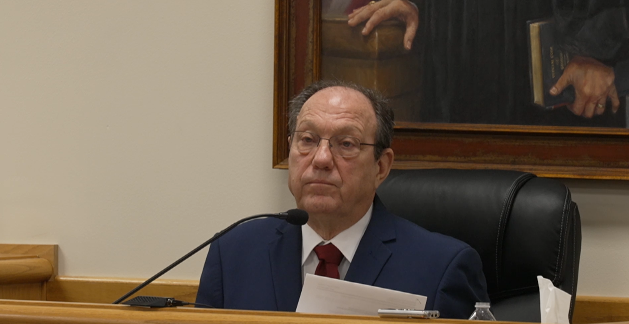
Day eight of the Tara Baker murder trial brought intense courtroom focus to forensic evidence and the testimony of a Georgia Bureau of Investigation (GBI) agent who reopened the decades-old case.
The investigator told jurors that the case, originally dating back to 2001, was reassigned in 2024 after advances in modern DNA testing produced new results. Those updated tests allegedly linked the defendant, Edrick Faust, to the crime, breathing new life into what had long remained a cold case.
DNA Evidence at the Forefront
Central to the day’s testimony was DNA evidence recovered during the original investigation. According to prosecutors, recent testing connected Faust’s DNA to evidence collected from the victim’s body, a development they describe as pivotal.
Jurors also heard about a recorded interview conducted after investigators identified the DNA match. During that interview, agents confronted Faust with the forensic findings, informing him that his DNA had allegedly been discovered on Baker’s body. The prosecution emphasized the significance of this confrontation as part of the investigative process that led to charges being filed.
The state argues that the advancement of forensic science — particularly improvements in DNA analysis — made it possible to revisit and reassess evidence that could not be conclusively tested more than two decades ago.
Defense Raises Doubts
The defense, however, sought to challenge the strength and interpretation of the DNA evidence.
Attorneys pointed out that DNA from Baker’s ex-boyfriend was also found on her body in the original 2001 sexual assault kit. They argued that the presence of multiple DNA profiles complicates the narrative presented by prosecutors and raises questions about timing, context, and interpretation of the forensic findings.
Defense counsel suggested that the existence of the ex-boyfriend’s DNA, documented during the original investigation, underscores the need for caution when drawing conclusions based solely on genetic evidence.
A Case Revived by Modern Science
The trial has drawn significant attention due to the long gap between the crime and the arrest. Prosecutors maintain that evolving forensic technology provided the breakthrough necessary to identify a suspect years later. Meanwhile, the defense continues to press concerns about reliability, chain of custody, and alternative explanations for the DNA evidence.
As the trial moves forward, jurors are expected to hear additional expert testimony regarding the scientific methods used in the updated testing and how those results were interpreted.
Day eight underscored the central issue in the case: whether modern DNA evidence is enough to conclusively tie the defendant to a crime committed more than two decades ago.
The trial continues.